Best fabrics for sweating: Wear this, not that
Lifestyle

Audio By Carbonatix
12:00 PM on Monday, August 3
By Israel Fontoura for AXE, Stacker

Best fabrics for sweating: Wear this, not that
You know the feeling. You pull on a fresh shirt in the morning and by midday, there's a dark patch spreading under your arm. Or your black tee has picked up white marks from your deodorant before you've even left the house. And that polyester gym shirt, the one you washed twice, still somehow smells. What most guys don't consider is that the fabric they're wearing is doing a lot of the heavy lifting. The right one works with your body. The wrong one lets it down.
AXE, the deodorant brand for guys, details how to choose the best fabrics for sweating, what to skip, and how to stop losing the sweat battle before the day even starts.
The fabric factor: Why it matters more than you think
Not all fabrics are built the same. Here are three things that determine which side your shirt is on:
- How quickly sweat evaporates. Some fabrics let sweat evaporate. Others trap it, bake it, and hand it straight to the bacteria that cause odor.
- How visible sweat is on the surface. Cotton absorbs moisture and shows it as dark patches. Performance synthetics pull it away from your skin before it becomes visible.
- How bacteria interact with the fabric. Body odor happens when bacteria break down sweat into the compounds that make you smell. Certain synthetic fabrics trap bacteria, which is why a worn-once polyester gym shirt can smell worse than a cotton tee worn the same way.
“Clothing doesn’t just absorb sweat; it changes the climate sitting on top of your skin, which directly determines how much your body sweats,” explains Unilever R&D scientist Matt Annecharico. “Breathable fabrics and natural fibers allow for more evaporation, while synthetic fabrics that fit tightly don’t allow for as much evaporation, which means more sweat can occur and less opportunity to cool you down.”
Choosing the right sweat-wicking fabric for workouts or the best sweatproof fabric for all-day wear is one of the easiest upgrades you can make.
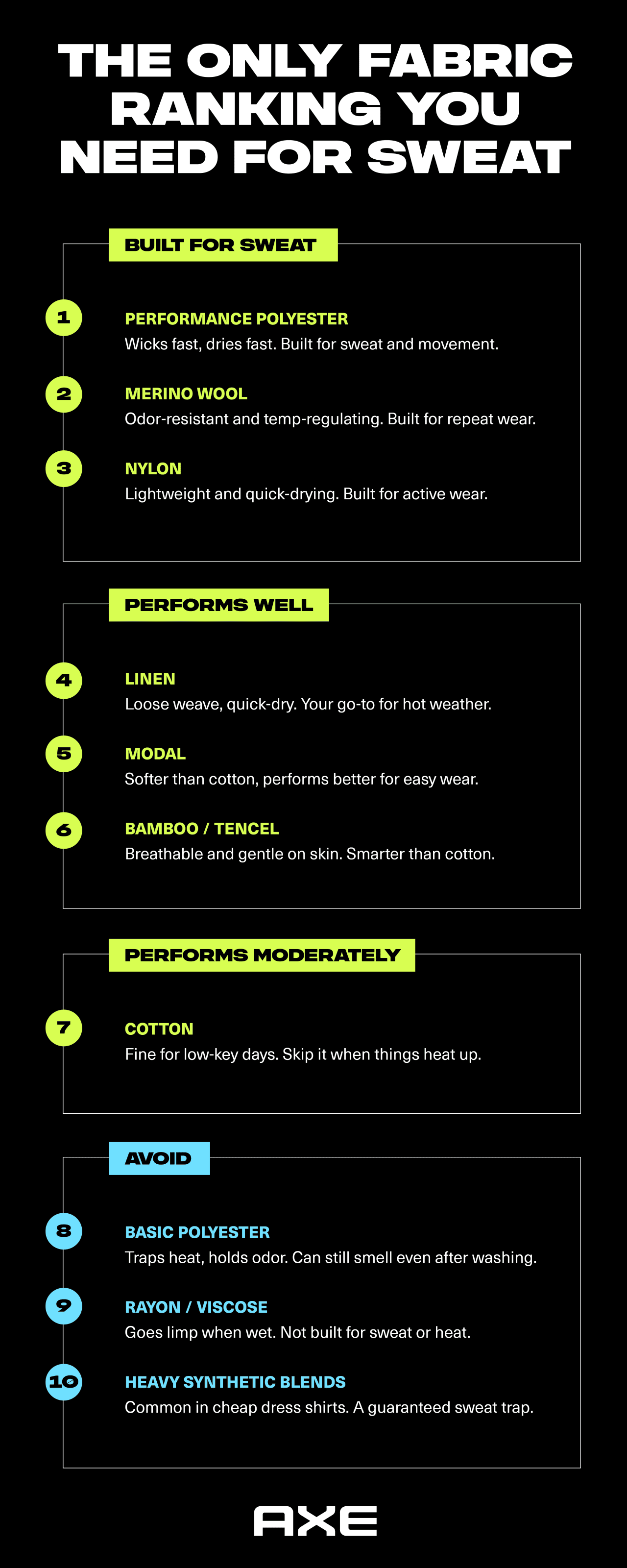
Fabrics that work with you: Natural options
Natural fabrics are a solid starting point. Most breathe well and feel comfortable against the skin, though some handle sweat better than others.
Cotton
Breathable, soft, and the most common fabric out there. The catch: it soaks up sweat and shows dark patches fast. Great for low-key days and undershirts. Not your friend during workouts or full days in the heat.
Linen
The hot weather MVP. Loose weave, dries fast, keeps air moving. It wrinkles like crazy, but for summer and outdoor settings, it's hard to beat. Linen-cotton blends give you the best of both.
Merino wool
Seriously underrated. Naturally odor-resistant, temperature-regulating and wicks moisture well. You can wear it multiple days without the funk. Real merino costs more, but earns it.
Bamboo / Tencel
Soft, breathable, and better at moisture management than cotton. Bamboo is easy on your skin and comes from a natural source. Tencel holds up better over time. Both can shrink, so check the label before you wash them.
Fabrics that work with you: Synthetic options
Synthetics get a bad rap, mostly because cheap versions are genuinely awful. Engineered performance synthetics are a different story; they’re some of the best sweat-managing options out there.
Performance polyester
The best sweat-resistant fabric for workouts. Wicks fast, dries fast, doesn't wrinkle. Just make sure it's performance polyester. That’s because basic polyester is the opposite. (See below).
Nylon
Quick-drying, lightweight and often blended with elastane for stretch. Good for active wear. Gets clammy indoors when there's no airflow, so skip it for the office.
Elastane / Spandex
Never worn alone, always blended in for stretch. A small percentage keeps a shirt comfortable. Higher percentages mean compression territory. Check what the main fiber is first.
Modal
Soft, breathable and moisture-wicking. A solid upgrade from cotton for everyday wear and underwear. Feels more natural than polyester but performs better than basic cotton.
Fabrics that make sweating worse
Some fabrics don't just fail to help; they actively work against you:
- Non-performance polyester: traps heat, holds odor, and survives multiple washes smelling rough.
- Rayon and viscose: go limp and lose their shape when wet. Not built for sweat.
- Heavy synthetic blends: common in cheap dress shirts. Avoid.
- Tight, non-breathable fits in any fabric: no ventilation means more heat, more sweat.
Quick answer: For guys who sweat heavily, the fabric that makes you sweat least is performance polyester for high-activity contexts, and merino wool or linen for everyday wear in heat.
Dress smarter, sweat less
Wear loose layers
Tight-fitting clothing traps heat against the skin and makes sweating worse. A relaxed fit lets air circulate. For dress shirts, a slim-but-not-skinny cut works best.
Choose colors that work for you
Patterns hide sweat well. Solid pastels and light grays can be the worst offenders for visible patches.
Use undershirts
A moisture-wicking undershirt absorbs sweat before it hits your outer shirt. One of the easiest ways to get your shirts to hide sweat.
Get your underwear and socks right
- Underwear: Cotton (everyday), modal (best for comfort and moisture management), bamboo (most breathable). Avoid 100% polyester boxer briefs for daily wear.
- Socks: Merino wool (year-round, naturally odor-resistant) or technical synthetic blends (athletic). Avoid pure cotton socks for active wear. They hold moisture and create the conditions for athlete's foot.
Why the right routine finishes the fix
The right shirt gets you some of the way there. For the rest, you need the right routine. Here's how to handle the most common problems:
Sweat patches on dress shirts
The most effective fix isn't fabric alone. It's an antiperspirant applied to clean, dry skin the night before. Sweat production is the lowest at night, which lets the active ingredients fully bond to your pits. Depending on the product, protection can last up to 48 hours or more.
White marks on dark shirts
Two things: apply less (two swipes are enough) and let it dry fully (60-90 seconds for stick) before getting dressed. A dry spray format is the best answer for guys who want an antiperspirant that doesn't leave white marks on dark clothing.
Heavy sweaters
If you deal with heavy sweat, using an antiperspirant not a deodorant is key. But start with a body wash from the same scent family to clear bacteria from your skin before it has a chance to break down sweat into odor. Finish with a complementary body spray for max effect, reinforcing fragrance and odor control throughout the day.
FAQs
What fabric makes you sweat the least?
Choose linen and merino wool for everyday wear, and performance polyester for workouts to wick moisture away fast.
Is 60% cotton 40% polyester ok?
Yes, this is a solid everyday blend. It’s more durable than pure cotton and more breathable than pure polyester. Not ideal for intense workouts, though.
Do you sweat more in polyester or cotton?
Depends on the polyester. Performance polyester wicks moisture fast, but cheap synthetics trap heat. Cotton breathes well but holds moisture once absorbed.
Is 80% cotton 20% polyester bad?
Not at all. It’s soft and breathable like cotton, with just enough polyester for durability and quicker drying. A reliable everyday blend.
How do I stop sweat patches from appearing on clothing?
Three things: breathable fabrics, an antiperspirant applied the night before, and a moisture-wicking undershirt if you’re wearing a dress shirt. Patterned colors hide patches better than solid pastels.
What deodorant goes on dry and doesn't leave white marks on clothes?
Switch to a dry spray. It dries instantly, so it won't transfer to clothing. If you prefer sticks, two swipes are enough. Let the product dry before dressing.
Which men's grooming products work best for heavy sweaters?
Apply an antiperspirant the night before, use an antibacterial body wash in the morning, and a body spray from the same scent family. That stack handles the heaviest everyday sweat scenarios.
Your fabric choice is the first line of defense against sweat, but it works best when your routine backs it up. Get your shirt fabric right and you're already ahead. The best material for sweating also depends on its purpose. Go natural for everyday wear, go performance for the gym, and layer your products. Once you've got the right fabrics working with you, smelling good stops being something you think about and starts being something that just happens.
This story was produced by AXE and reviewed and distributed by Stacker.